-
Your Guide to Gardening Success in 2025
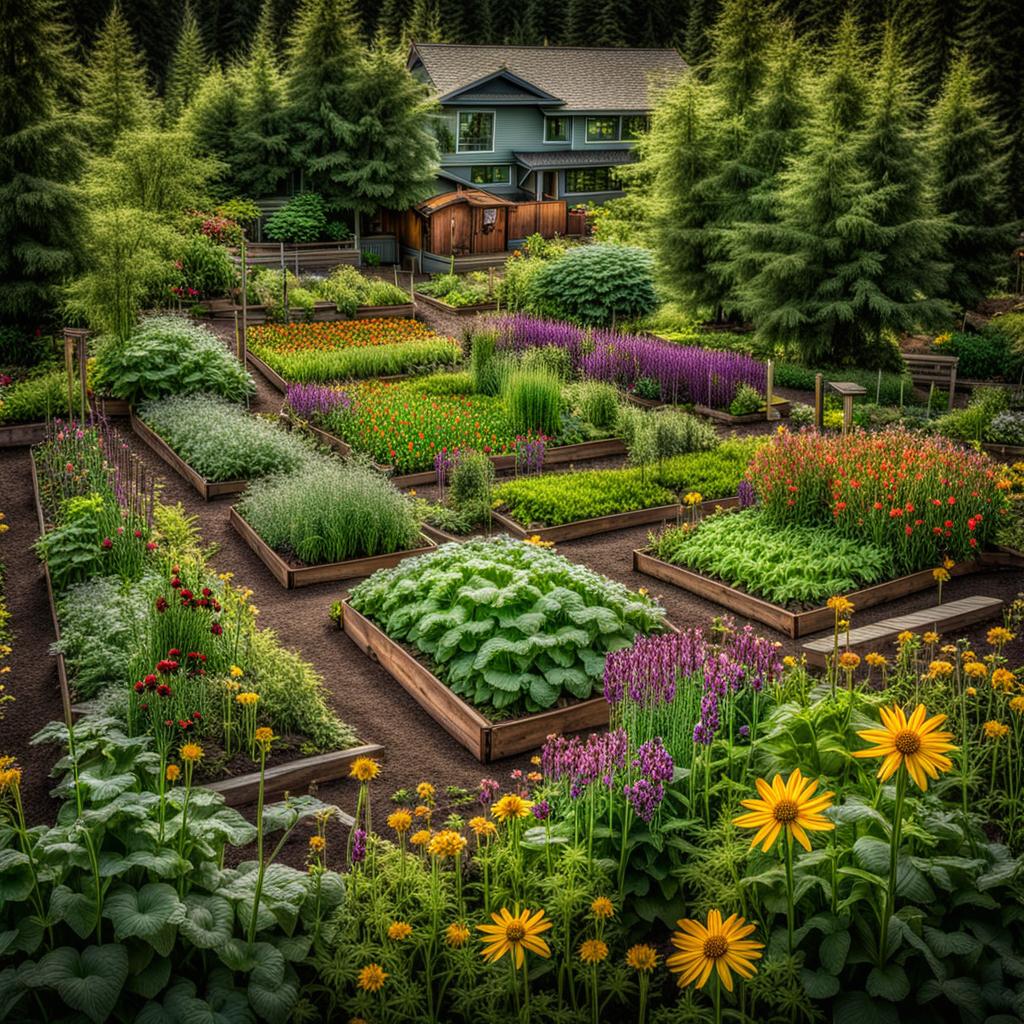
Discover essential tips to eliminate anxiety and maximize your garden’s potential
The best advice we can pass on to new gardeners and those simply anxious to get started for the year is to exercise a little bit of patience and utilize this time to create a space for any starters you bring home. If from an outdoor center, some protection outside like in a greenhouse or a covered porch is sufficient. If the plant was indoors, work on hardening off before leaving it outside for a whole night. Utilize this time that Western Washington weather is figuring out what it wants to do, to also figure out what you want to do for the season.
Even if you didn’t bust out the plant catalogs and a glass of vino back in February, you still have time to complete one of the most critical parts of a successful growing season; planning. This is not to say that you can’t just go for it and start sticking stuff in the ground and buying starts because they look cute and begged to come home with you, many do– plants that is; it’s hard saying no them, like trying to say no to your cat or dog when they roll over for a belly rub after annihilating the very last toilet paper roll in the house. Doing mishash planting may not give you the desired result in the health of the garden or a bountiful harvest. Just like your pet, adorable, but doesn’t take away the fact that there is no toilet paper in the house.
Dog getting a belly rub The anticipation of the gardening season and all of those beautiful fruits, veggies, and flowers can be just as anxiety producing as it is zen enabling. Here are just a handful of some tried and true tips to eliminate the anxiety and bring on the zen for your 2024 season.
- Take an inventory- What do you like to eat? How much do you like to eat it? How often do you want to eat it?
Yes, you may like tomatoes….but do you REALLY like tomatoes? And, what kind of flavor profile do you want in that tomato? Sweet? Tart? Citrusy with a tomato-y kickback? Do you want to try your hand at making tomato sauce for your famous lasagna, or are you more interested in a juicy slice of tomato on your go-to sammy?
While this example is talking about tomatoes, these are still the types of questions you should be asking about everything you are considering growing over the season.
In the case of tomatoes, there are over well over 10,000 varieties and each has a different flavor profile and use (seriously, that’s not a typo). Additionally, some tomato plants will grow until the frost takes it out (indeterminate) potentially taking up premium real estate in the garden and others will give you one or two flushes all at once before they tap out (determinante). Grocery stores usually only have a handful of varieties of any vegetable or fruit, so your favorite internet browser and fellow gardeners are a great resource for learning about different varieties of any plant and how they grow.
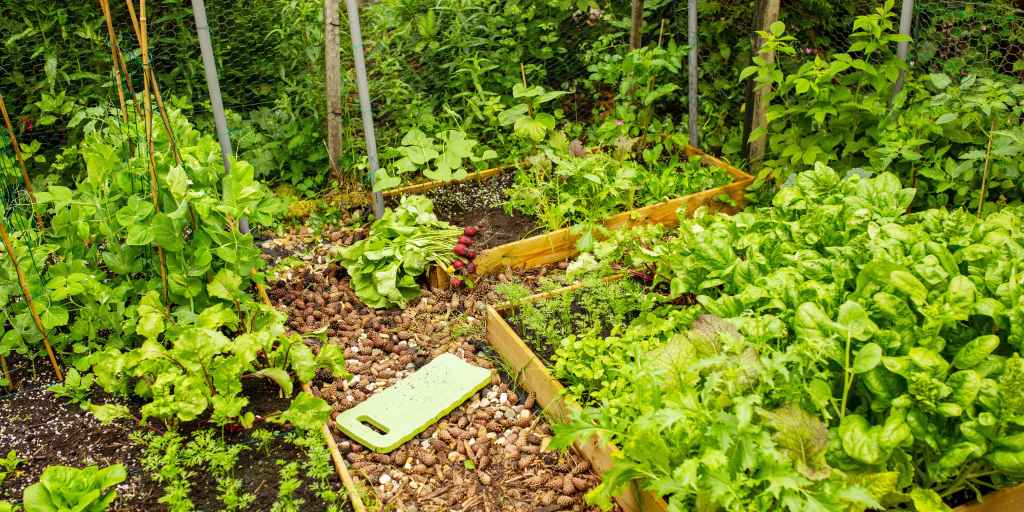
- Space- How much space do you have to garden? How much time do you have to commit to the care of your garden?
There’s a huge difference between growing plants in the windowsill in an apartment, versus a patio/deck or a raised bed. It’s important to have an understanding of the space that you are dealing with because this alone determines how much you are able to grow at any time over the season, even using methods like companion planting and square-foot gardening.
“The quantity of vegetables that can be grown in 40 square feet – a bed 4 feet wide by 10 feet long – will provide salads, greens and tomatoes for an entire season. Five beds of this size can yield 300 pounds of vegetables and soft fruits in a 4 – 6 month growing season, which is about what the average person in the U.S. consumes annually”
– UMASS EXTENSION CENTER FOR AGRICULTUREYou also want to pay attention to the time investment too! This is something that frequently creeps up on new and ambitious gardeners. Depending on what you are growing, the composition of your soil, and location of your garden, you may need to water several times a day during the hottest part of the season in order to not lose your plants. Then there are tasks like training vining plants on a trellis, deadheading flowers and pruning, or even treating disease and pests. All of these things take time and if not done in a timely fashion, can create a host of problems with your garden and the harvest later on. Often, these end up impacting your garden neighbor and sometimes the whole garden at large when neglected!
Like a good insurance company is there for you, be there for your plot and maintain it so you don’t need to submit a claim in the form of pesticides or herbicides, even organic ones. It’s not a guarantee that you won’t have to deal with pests or disease, but regular garden maintenance cuts down on the chances that you will need to.

- How many people are you feeding? Is this supplemental for you or are you trying to make your produce grocery bill the way of the dodo bird for the whole family?
Having an understanding of how many people you will be feeding can help you effectively plan out your season and reduce the issue of having too much or too little produce. Some produce can be canned or pickled, frozen, or even donated to the food bank, but even with this, all fresh produce has a finite shelf life and immediately begins to deteriorate the moment it is harvested. You’ll notice that things like leafy greens and cucumbers last longer when grown yourself, for example; they taste better too, but even these will eventually decompose. Get the entire family involved and grow the things they will eat. For example, if your family loves to eat tomatoes and you want to can some; grow several different types. If they hate tomatoes, don’t grow any just because they are cool to watch, no matter how tempting. Or if you like to eat a fresh salad every day, but you’re only feeding yourself, utilize a growing method like succession sowing in your raised bed, and choose a variety that is personal sized like Little Gem or Tom Thumb lettuce varieties.
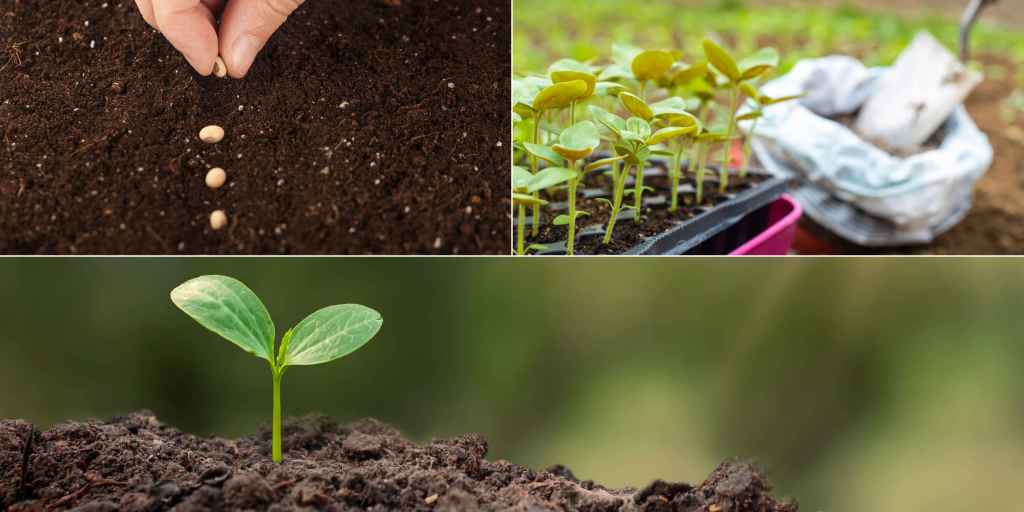
- What seeds, starts, and volunteers do you already have? Which seeds versus starts do you need?
Starter plants are totes adorbs, but seed packets hold the future of what could be and that is why purchasing seed packets is probably more difficult to NOT do than not purchasing plants. It’s kind of easy to avoid the garden center with the fresh plant babies poking out of the soil, but stores get really creative about the placement of the seed packets and at $2.50- $3 for most packs these days, it doesn’t seem like much until you suddenly have 50 of them and the growing space of a 15 gallon rubbermaid storage container. Then of course, what decided to come back from last season…tomatoes anyone?
Being strategic about what plants you grow from seed versus starters can save a lot of money in the long run, but also make it much easier to take inventory of what you already have at the beginning of the season. If, like some people, you have a generous amount of seeds that need to be organized, I would suggest getting a photo case or even a large (or a few) recipe boxes that are air and water tight. Although the best practice is to refrigerate or freeze some types of seeds, for the average community and home gardener, this isn’t really necessary; a cool, dark place is sufficient. However, it’s worth noting that if you plan to practice seed saving over 2024, it’s a good idea to do some research about the best practices for preserving seeds from the particular plant you’ve got your eye on.
The last thing I will add is that gardening shouldn’t be a slog. Chances are, if it is feeling that way to you, you may have taken on too much for the year and need to cut back on the things you are growing. It’s also perfectly fine and even healthy to let your plot and pots go fallow for a season. Personally, as hard as it is, I am limiting myself to 1 tomato plant because it turns out that I don’t actually like them that much; even though they are super cool and rewarding to watch grow because growth happens quickly and satisfies my need to see something happening in the garden.
Yes, I was calling myself out earlier with tip #1… and #4. Hey, you can still know the way to the castle and get carried away with side quests *shrugs*
As we are ramping up in the University Place Community Garden for the 2024 season, know that you are surrounded by a collective community that is willing to lend a helping hand, a growing tip or hack, or a taste test (please ask the plot owner and don’t help yourself without permission). Regardless of where your garden knowledge comes from or what level of education you have in regards to growing plants; we’re ready to nerd out and learn alongside you and brain dump our knowledge too.
Here’s to another amazing growing season keeping us on our toes and celebrating the bounty of self-sufficiency and community.
If you’re a member of UPCG, share with the community in Slack what you’re growing this year and what plot you’re in!
-
Natural Area and Seasonal Wetland
Between our garden and Evergreen Primary School lies a field which becomes a seasonal wetland during our rainy season. While the area usually dries out during the summer, A consultation from from Melissa Breckenridge of the Pierce County Water Conservation concluded that enhancing the area with native plants and continuing to remove invasive species could have a beneficial effect on our garden environment by inviting more insects and other species to the site.
Among the plant species found in and around the site are native rushes, sedges, rose, willow, alder and salal.
We were awarded a small grant from the Master Gardener Foundation of Pierce County (MGFPC) Sharon Ballard Community Garden Grant Committee. The grant allotted funds for the purchase of more native plants so that we can continue to enhance the plant diversity around our garden and integrate it with the native plant community.
Invasive Species at our Garden
We have Scotch Broom, Himalayan Blackberry and Poison Hemlock in the garden which require ongoing maintenance and removal.
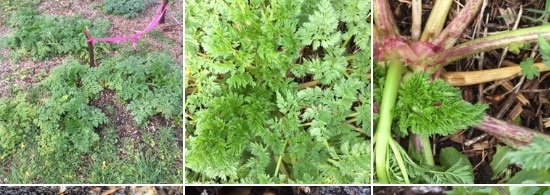
Poison Hemlock in the North Meadow (Center)
Poison hemlock – Conium maculatum is present in a few places north of the garden. This plant is highly poisonous and should be avoided. Pierce County Noxious Weed Control Board is helping with eradication. We will continue to monitor and manage this species as seeds can be dormant for > 10 years. Children and pets should avoid the north meadow.
-
Food Bank Project
2018 – 1464.5 pounds in November
2017 – Over 3000 poundsEven with a rainy start this spring UPCG looks to surpass its 1300 pounds of fresh organic produce harvested in 2018. Our UP partner Families Unlimited Network Food Bank provides produce to those in need – part of our mission as a nonprofit
With the rainy winter and spring 2017 seemed a slow start. On April 2nd we harvested over wintered kale and other greens. Lettuce, beets, carrots, broccoli, garlic, various squash, tomatoes, peppers, spinach, basil and pumpkins are planted, mulched and thriving.
Families Unlimited is located in the area behind the University Place Presbyterian church on 27th and Sunset. Enter on 27th and drive to the back of the parking lot. The best drop off times are Monday, Wednesday, or Friday morning between 10:00am and 11:00am when FUN isn’t serving clients. You may also deliver on Tuesdays or Saturdays between 10:00am and noon. Someone is usually in the office by 10. If you deliver it off hours, leave it on one of the tables, and in all cases, if your produce came from UPCG, let them know and they will credit you (and us) for the donation! Thank you!
Food Bank Partner – Families Unlimited Network
UPCG donates generously to the Families Unlimited Network Food Bank. The original 12’x27’ plot designed in 2011 exclusively for raising produce for the food bank was augmented in 2015 with a 25’x50’ pumpkin, squash, and corn patch. Each year has seen an increase in the amount of produce donated. In the 2015 growing season, UPCG donated 3,028 pounds of produce.
Garden members who are interested in working the Food Bank plots help throughout the growing season with planting, weeding, watering and propping the plants. Other members choose to help with the harvest or add to the harvest by donating produce from their own plots. All efforts are appreciated and help UPCG give fresh produce to the Food Bank for their clients.
Hunger has many faces and stories. Supporting families and solving the food security crisis is part of what UPCG does.
Read Families Unlimited Impact Report.
Food Bank clients appreciate cilantro, beets, carrots, potatoes, greens, tomatoes, beans, squash, corn and of course pumpkins. Plant and donate.
Food Bank hours:- Tuesdays 12 PM – 3 PM
- Thursdays 3:30 PM – 5 PM
- Saturdays 10 AM – 12 PM
UPCG Food Bank Plot and Harvest
Nuts and Bolts of Food Bank produce production and harvest.
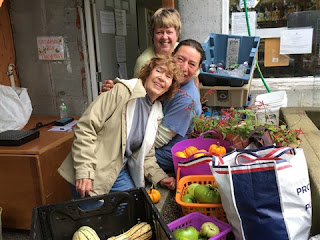
Dropping off the harvest at the food bank – Nancy, Molly and Angie. The 25×50 community patch helped us bring in over 3000 pounds of produce for the Families Unlimited Network Food Bank Program in 2015.
-
Composting Project
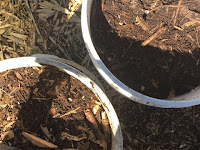
Aged compost is active – help yourself
Bacteria, good nematodes, beetles, earthworms and fungus are part of the nutrient
web of life.
Sieve to get just the fine compost
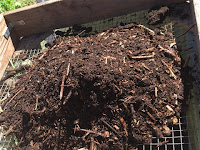

But I don’t like the wood chips and other large pieces of material.
Use the sieve over the wheel barrow or hold over the garden and gently shake or let it “rain” down on starts.
Top dressing or mix in the soil
The compost smells great and will complement your tagro putting soil.
Effectively manage the compost site linking soil building of nutrients in our beds to our recycled garden waste (read: “browns” and “greens”).
Help make compost by depositing cut up 6 inch size or less materials
Visit our worm bin/wooden box at the north end of the compost bins, bring shredded newspaper/office paper finely shredded for bedding and kitchen waste.
make a regular practice of adding compost to your bed. Finely crushed egg shells can be directly to your soil.More on composting, soil that is part of a wet land and links to noxious weed info
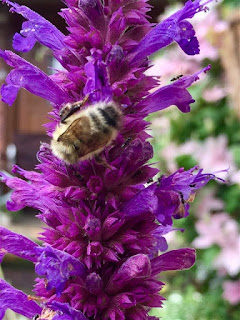
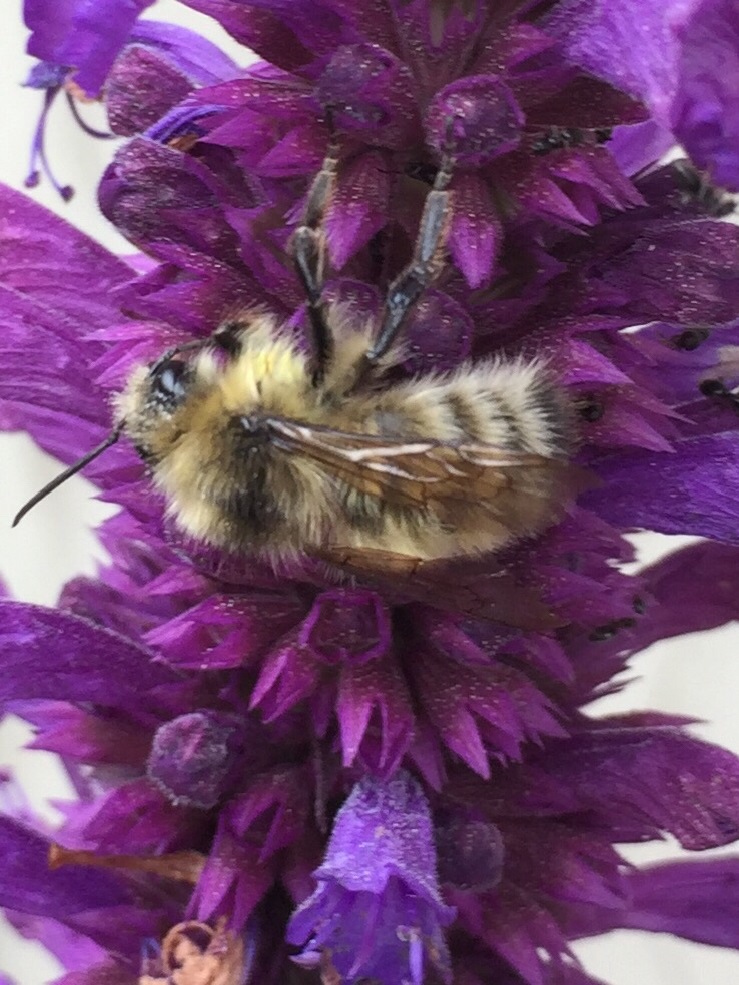
Bee on Butterfly Bush Because of our rocky soil, amending your beds with organic amendments is a necessity.
We are currently enhancing our composting program with hot composting and a worm bin or vermiculture Top dressing with mulch adds biomass or a layer of life to your soil
For more info on wetlands see: http://www.co.pierce.wa.us/FAQ.aspx?QID=609 For more info on noxious weeds see: http://piercecountyweedboard.org
-
Harvest Pierce County
-
Building Healthy Soil

Not just dirt! What are the components of your soil? How do we make soil? Or better yet, How is soil made? Who makes soil? Is sand soil? What is UPCG’s parent soil? Dirt, dust, mud, earth, grit…hmmm…lot’s to think about.
Nitrogen gas is drawn into the earth by means of rhizobia a bacteria that works symbiotically with the roots of certain plants. Legumes, beans, peas and vetch produce nodules that collect nitrogen with the work of rhizobia who convert it into ammonia. For fascinating reading and for the citizen scientist gardener cut and paste the following link into your browser.
Source: Boundless. “The Legume-Root Nodule Symbiosis.” Boundless Microbiology Boundless, 26 May. 2016. Retrieved 7 Apr. 2017 from https://www.boundless.com/microbiology/textbooks/boundless-microbiology-textbook/microbial-ecology-16/microbial-symbioses-196/the-legume-root-nodule-symbiosis-993-7114/
-
Pollinators
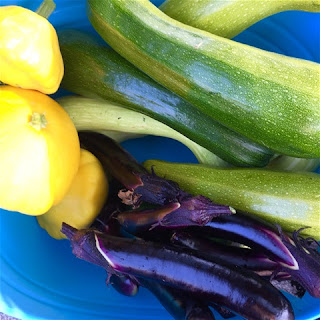
Visit pollinator.org. Wondering about Zika mosquitoes and pollinators the government is meeting on this and considers local vector control .
-
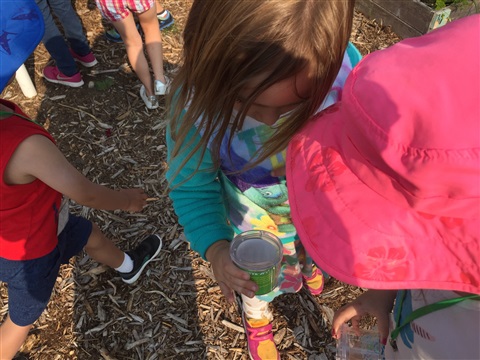
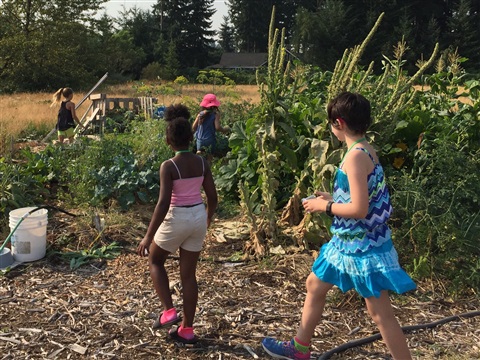
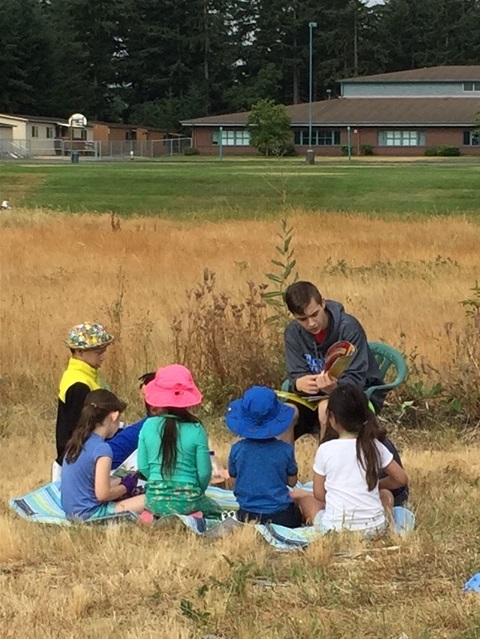
Children in the garden – romping, digging, playing, learning.
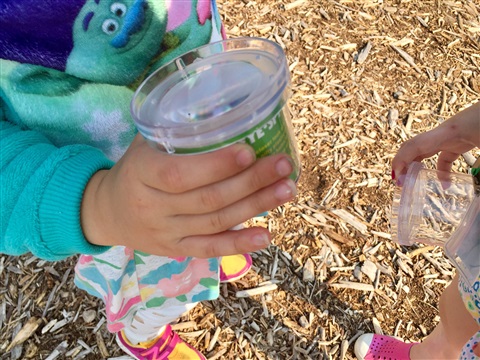
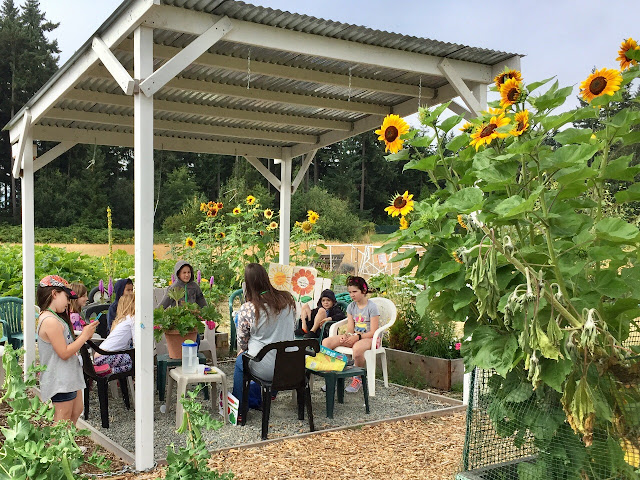
Kristi Timme leads Evergreen Primary School
PTA Summer Garden program a Whole Foods-Whole Kids Foundation grant project for school gardens.A Whole Foods-Whole Kids Foundation grant for school gardens was awarded to Evergreen Primary School’s PTA to spend towards connecting the school to the garden.https://www.wholekidsfoundation.org/kids-club/project/READ:+Book+Club
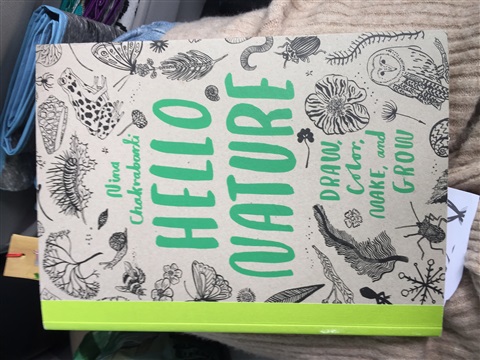
More online resources: http://www.biokids.umich.edu/ is a fun web site with information for the student scholar or 5 minute breeze for information. Keys to animal tracks, animal shelter, what animals leave behind – think that branch nibbled by a deer or a clover chomped off by a rabbit. The field guides though more designed for Michigan student residents will be a spring board for further inquiry. See their question page: http://www.biokids.umich.edu/help/questions/
-
Saving Seeds – Tomato Seeds
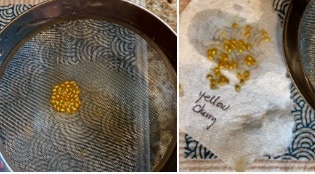
Nothing like a garden side conversation. A member asked me about saving tomato seeds from a tall vine of cherry tomatoes standing at the north end of her bed. Do you have an heirloom or special tomato you found particularily tasty? Can you save the seeds? YES! I found a permaculturenews.org site that gives a step-by-step (for large scale) harvesting of seeds, but can be modified for the single prized beauty. https://permaculturenews.org/2014/07/08/save-tomato-seeds/ Reading down the comments were some seed savers from Australia that take the tack of “keeping it simple” by smashing on paper towel and letting it dry – here is the excerpt. “…we just squeeze a tomato on a paper towel, spread sticky jelly with seeds inside evenly, write name of variety on paper, date, hang the towel in the shade till bone dry. Store in small jar. Label jar. When planting time comes, cut a portion of paper with stored seeds. That’s our short version…” Storage for tomato seeds – is COOL, DARK and DRY place. NO freezing.
I used a kitchen strainer for one cherry tomato – see photo.
-
More on bugs: “antlions, tigers and spiders, Oh My!”
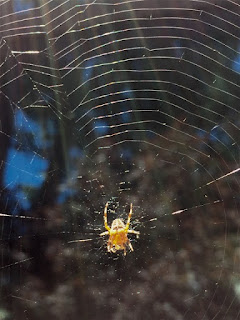
There’s a spider in my garden. Her web is spread over my plants.
First they are bug catchers and big eaters. Bug catchers = good. Poisonous spiders 2 in WA State are the black widow and yellow sac. See this site for photos, locations, bite signs and symptom ms. http://www.doh.wa.gov/CommunityandEnvironment/Pests/Spiders There are no brown recluse spiders in this state. Are you ready to move on…?
While a .com web site this https://www.planetnatural.com/garden-spiders/ is gardener friendly reading and reassuring with built in answers to questions I have and I think you might have. How beneficial? what about good bugs and beneficials getting trapped in webs? Are there non web spiders? YES! see this university.edu site on wolf spiders: http://lancaster.unl.edu/pest/resources/wolfspider.shtml wow, wow, wow.

University Place Community Garden
Stewardship & Community Creating Food Security
 University Place Community Garden